Continue with Facebook
 Continue with Email

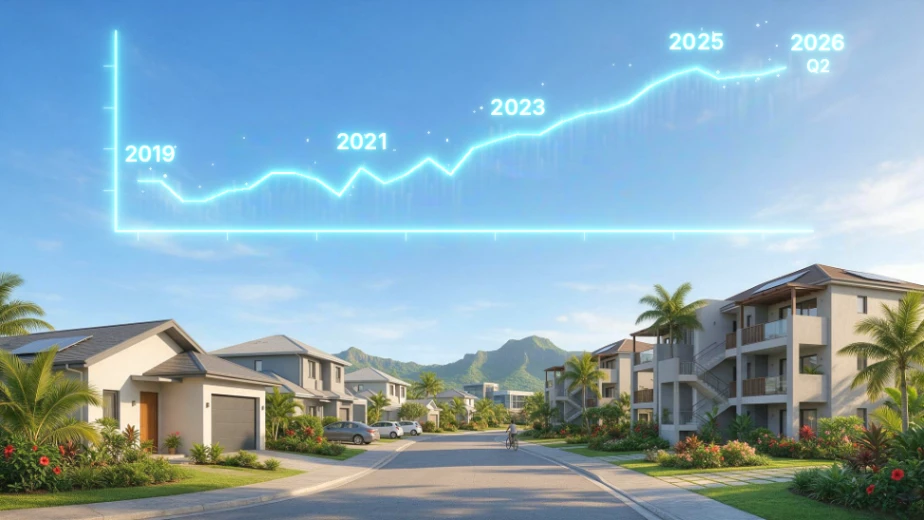
House and apartment prices in Mauritius rose between April and June 2026, recovering from the decline recorded after their previous high in 2025. However, prices remained almost unchanged from a year earlier, according to the latest Statistics Mauritius report.
Stronger quarterly increase
The Residential Property Price Index, which tracks prices through registered house and apartment sales, rose by 3.3% between the first and second quarters of 2026. This followed a smaller increase of 1.3% in January to March.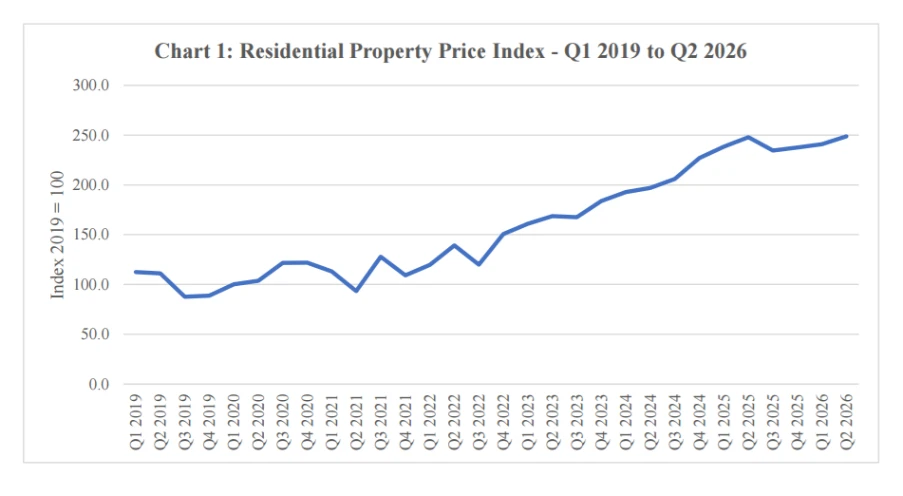
The index reached 248.9, compared with 240.9 in the first quarter. Yet it was only 0.4% above its level in April to June 2025. Annual growth therefore slowed from the 1.0% recorded in the first quarter, despite the stronger recent increase.
These comparisons describe different movements: prices rose noticeably over the latest three months, but barely changed over a full year.
Why the homes sold matter
The types of properties changing hands can affect the overall price picture. Selling more expensive homes and fewer cheaper ones can push up average sale prices without every type of home becoming dearer.
To help account for these differences, Statistics Mauritius groups transactions by houses and apartments, domestic or foreign purchases, and geographical area when calculating the index.
In its first quarter report, it noted that the balance between standard and higher-end properties had remained broadly stable. This suggested that price movements mainly reflected changes within those groups, rather than a shift towards more expensive purchases. The latest report does not provide an equivalent assessment for Q2.
Only a combined national result is published for Mauritius, so the figures do not identify which regions or property types recorded the largest increases.
Recovery, not another price surge
The index reached 247.8 in April to June 2025, then fell to 234.5 in July to September before recovering to 237.7 by the end of the year. It rose further to 240.9 in January to March 2026 and 248.9 in April to June, slightly exceeding its previous high.
The latest results therefore show that prices have regained lost ground, rather than surged far beyond last year’s levels. Whether this recovery leads to further increases remains uncertain: the report provides no forecast, and the figures remain provisional.