Continue with Facebook
 Continue with Email

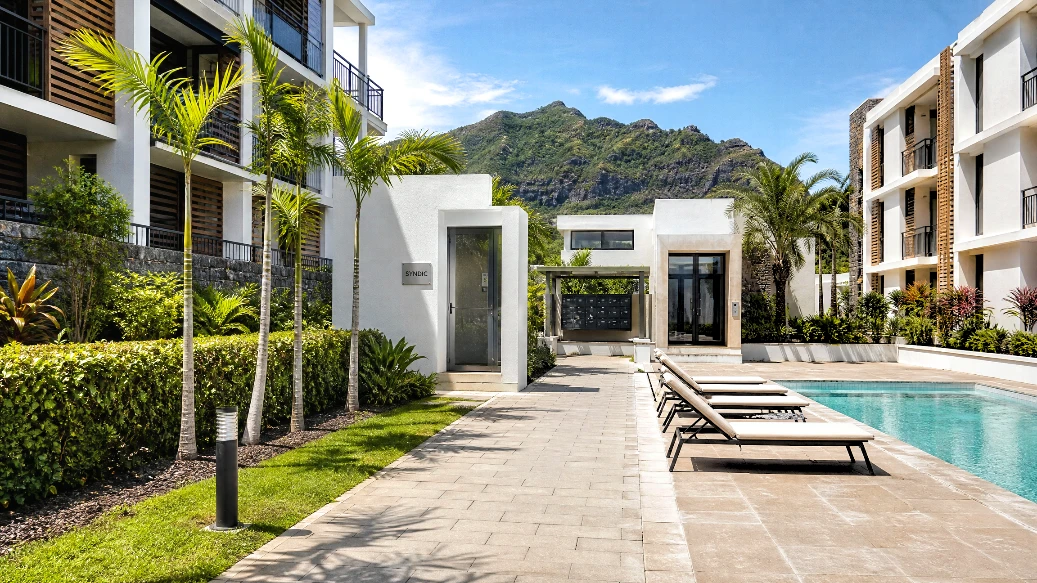
Buying an apartment or villa within a Mauritian residence means acquiring a private unit and an undivided share of the common areas. The co-owners collectively form the syndicat des copropriétaires, a legal entity responsible for conserving the property and administering its shared spaces. Its decisions are made at the general meeting and carried out by the syndic, under the oversight of the conseil syndical.
The syndic is the operational manager of the residence. It may be a professional firm or, in smaller developments, an unpaid co-owner acting voluntarily. Its remit typically includes preparing budgets, collecting common charges, maintaining accounts and records, organising general meetings, arranging insurance, supervising service providers and implementing resolutions voted by co-owners. It also represents the syndicate in its dealings with suppliers, public authorities and, where necessary, legal proceedings.
For buyers, the quality of syndic management can have a direct effect on both daily living standards and the long-term value of a property. Before committing to a purchase, request the co-ownership rules, recent general-meeting minutes, current accounts, the approved budget, insurance details and information on planned or unresolved maintenance works. These documents can reveal whether the residence has adequate reserves, significant arrears, recurring disputes or forthcoming exceptional contributions.
Common charges usually fund shared services and infrastructure, such as security, cleaning, landscaping, swimming-pool maintenance, lighting, lifts, waste collection, common-area repairs, insurance and management fees. Under the Mauritian Civil Code, co-owners must contribute to charges relating to maintenance, repair, conservation, management of the building and administration of the co-ownership, generally in proportion to their share of the common parts, while some service-related costs may be allocated according to the objective utility of those services to each lot.
As for pricing, there is no single market tariff in Mauritius. Published market guidance indicates that syndic fees in residential estates or apartment buildings can range from about Rs 2,000 per month to more than Rs 30,000 per month, depending on the scale of the development, the level of services, staffing, equipment and overall positioning of the residence.
Governance also matters. Owners vote at general meetings on budgets, major works, the appointment or renewal of the syndic and other key decisions. One or more co-owners representing at least one quarter of the total voting rights may request that the syndic convene a general meeting, subject to any lower threshold set out in the co-ownership rules.
A well-run condominium should provide transparent financial reporting, clear contractual terms, documented maintenance planning and responsive communication. Prospective owners should read the syndic contract carefully, particularly its scope of services, remuneration, renewal terms, additional-fee schedule and procedures for emergency works.
*All prices, charges and budgets are provided for reference only. Actual costs may vary according to the residence, the services included, the approved budget and any exceptional works. Buyers should contact the appointed syndic or seller directly to obtain the exact and current charges applicable to the property concerned.