Continue with Facebook
 Continue with Email

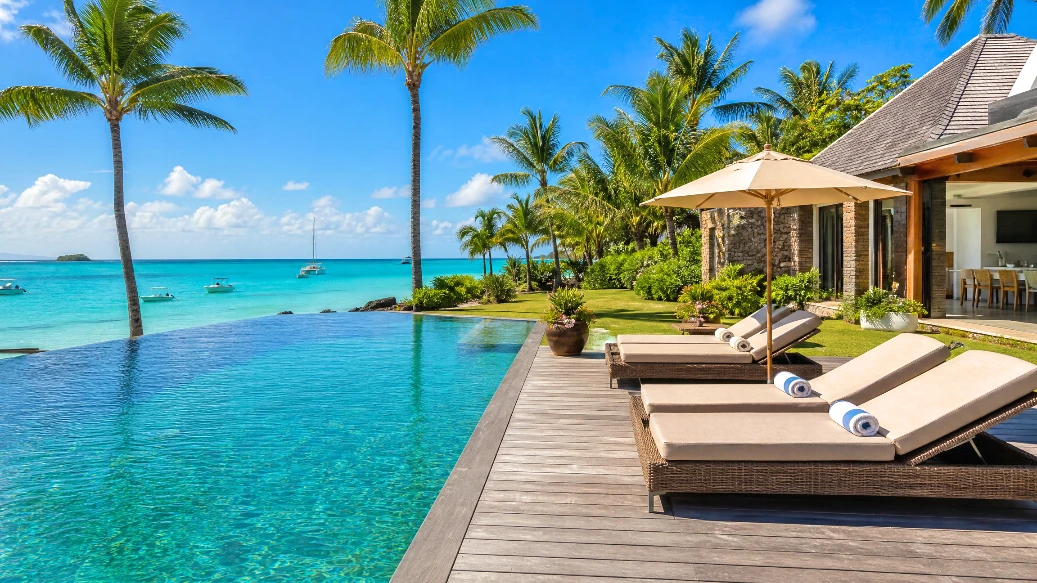
Mauritius has long been celebrated for its tropical beaches, yet its real pull for real estate investors lies in its role as a rare institutional outlier in Africa. For high net worth buyers, Mauritius offers something still unusual in the region, institutional certainty anchored in strong democratic and governance credentials.
Mauritius is currently Africa’s only country classified as a “full democracy” in the Economist Intelligence Unit’s Democracy Index, and it has long ranked among the continent’s best performers in the Ibrahim Index of African Governance, frequently holding the top position even as peers such as Seychelles now closely compete. As one of the few African sovereigns that retain an investment grade credit rating, it also benefits from a reputation as a stable, rules based jurisdiction.
This institutional strength supports its role as a financial and business gateway linking Africa with Asia and the Middle East. For international property buyers, the appeal is reinforced by a regime that allows free repatriation of capital and rental income and imposes no foreign exchange controls, creating a predictable environment for cross border capital flows and tax efficient structuring. Against a background of geopolitical uncertainty in other regions, more international families, professionals and entrepreneurs now view Mauritius less as a seasonal retreat and more as a secure, long term base.
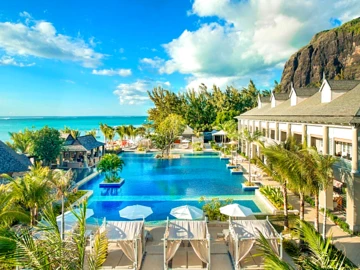
To meet this relocation driven demand, the Mauritian property offer has steadily evolved. The market was shaped early on by the Integrated Resort Scheme, which opened the door to foreign buyers seeking premium resort style villas and branded residences. Today, however, the focus is broader, with modern frameworks such as the Smart City Scheme and Ground+2 apartment regulations defining much of the new supply that targets globally mobile residents.
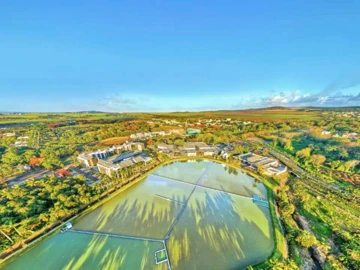
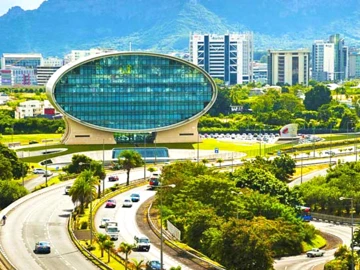
This evolution mirrors a changing buyer profile. Increasingly, relocating professionals and younger families are less interested in isolated holiday homes and instead seek compact, connected “live work play” environments close to international schools, retail hubs and business districts in locations such as Grand Baie, Moka and the West Coast. Mixed use precincts, business parks, healthcare clusters and leisure amenities are now planned as part of the same urban ecosystem rather than as separate projects.
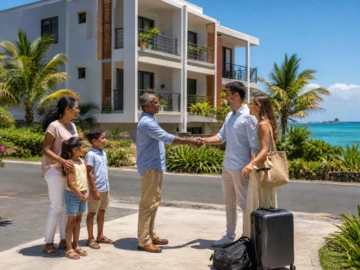
Crucially, these new development vehicles maintain one of the island’s strongest incentives for foreign buyers: a qualifying property investment of at least USD 375 000 in an approved scheme can make the non citizen purchaser and their dependents eligible for a residence permit linked to ownership of the property. In most cases, this includes the investor’s spouse and dependent children, providing a clear pathway for families seeking school age relocation or succession planning benefits.
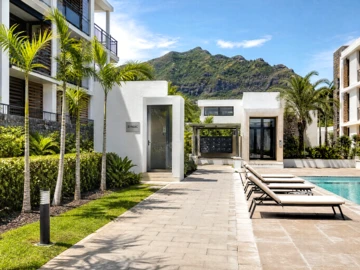
For buyers with more urban priorities, the Ground+2 framework opens access to standalone apartments in condominium style buildings that have at least two levels above ground and a minimum purchase price of MUR 6 million or the equivalent in foreign currency. This gives investors a way into established neighbourhoods and emerging city centres rather than limiting them to resort enclaves, while still enjoying the advantages reserved for foreign purchasers.
By expanding from resort led schemes into integrated, community focused neighbourhoods while preserving institutional strength, financial openness and long term residency options, Mauritius now offers a rare combination of legal security, lifestyle quality and capital mobility. Together, these factors place the island among Africa’s most compelling real estate investment destinations for globally mobile households and long term capital.