Mauritius property has never been a simple market to read. Prices have nearly doubled since 2019, yet some localities are correcting, others are breaking records, and the gap between regions has never been wider. Whether you are a Mauritian weighing up your next move or a foreigner deciding where to put down roots, the answer is not the same for everyone. This guide cuts through the noise. It tells you where prices stand today, what the direction of each market signals for buyers and sellers, and where different lifestyles and budgets fit best.
Buying or Selling Locally
As a Mauritian citizen, you can buy anywhere on the island without going through any investment scheme. The real question is where your money works hardest. The PropertyCloud Real Estate Index tracks average asking prices across all major regions and localities, based on active listings rather than official transaction data. Think of them as a starting point for your search, not the final word on price.
The North: The Island's Busiest Address
The North is where the market is thickest and competition is sharpest. Grand Baie, the island's most recognised coastal address, averages Rs 23.7 million, up 7.7%. Roches Noires has moved faster, up 27.4% to Rs 34.7 million, driven by growing demand for privacy alongside the coast. Grand Baie and Roches Noires are still rising. If you are selling, this is a market that supports your asking price. Trou aux Biches tells a different story: asking prices have dropped 26.5% to Rs 16 million. For a buyer wanting to be in the North for less, that is a market worth negotiating in.
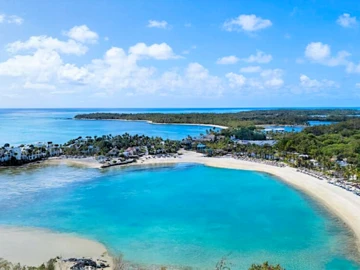
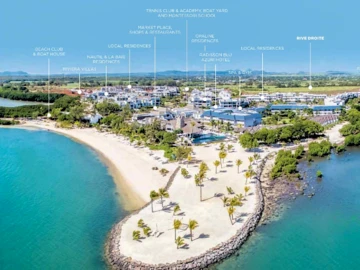
The North is where international schools, private clinics, restaurants and shopping centres are concentrated. For families relocating to Mauritius, it is often the first choice. It is also, according to the Economic Development Board (EDB)’s data, the dominant region for foreign residential scheme purchases, accounting for more than half of all foreign acquisitions recorded. French buyers in particular have historically shown a strong preference for this coast. Developments such as Mont Choisy Le Parc Golf and Beach Estate in Grand Baie reflect the profile of this market: large-scale, resort-integrated, and attracting buyers who want lifestyle and capital appreciation in the same address.
The West: Surf Town to Resort Villa
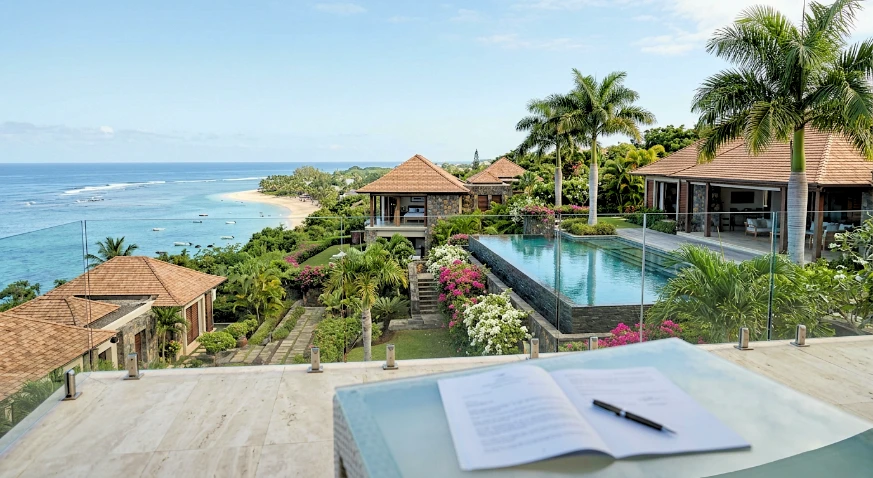
The West does not have one market. It has several. Black River sits at Rs 40 million, up 11.4%, drawing buyers who want mountains behind them and ocean in front, with room to breathe. Tamarin, the surf town that quietly became a lifestyle destination, averages Rs 26.9 million, broadly flat at plus 1.3%. Then there is Flic en Flac, a proper coastal town that has pulled back sharply: asking prices down 20.6% to Rs 9.9 million. For a Mauritian buyer looking for sea access without a premium price tag, this is one of the more interesting pockets on the island right now.
Among foreign buyers, South African buyers have in recent years shown a particular affinity for Black River and Tamarin, drawn by the mountain and ocean combination, the drier microclimate, and a pace that feels removed from the busier north. The west accounts for around a quarter of all foreign scheme purchases and continues to attract resort-integrated villas and apartment developments along its coastline.
The East: Seclusion with a Sea View
The East rewards those who look closely. Trou d'Eau Douce and Bel Air have surged 72% to Rs 16 million, pulled upward by golf resort development and the appeal of sheltered lagoons with a quieter rhythm than the North. Flacq and Belle Mare are moving the other way, down 26% to Rs 18.5 million, offering beach proximity at a price that still feels grounded. Sellers in Trou d'Eau Douce have reason to act. Buyers in Flacq and Belle Mare have room to negotiate.
The East holds a small number of residential scheme projects but they are among the most exclusive on the island, with average sale prices per square metre historically the highest of any region. Beau Champ in particular is home to ultra high-end integrated resort developments that attract buyers seeking complete seclusion. Senior Swiss buyers have shown a consistent preference for the East Coast in recent years, drawn to its quieter lagoons and golf resort lifestyle.
South and Centre: Quiet Growth, Real Value
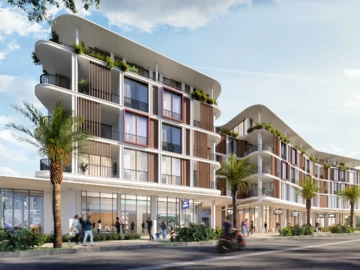
These two regions have been quietly reshaping the conversation about where Mauritius is heading. The Centre (Moka, Rose Hill, Quatre Bornes) remains the most affordable region on the island, with strong infrastructure, good schools and easy commuting access. Rose Hill and Quatre Bornes average Rs 8.9 million, up 0.8%, essentially stable. Vacoas and Phoenix have eased to Rs 7.9 million, down 6.8%. For foreigners, the Centre primarily attracts apartment buyers, with G+2 condominiums in smart city developments driving most activity. Read more on what is reshaping the Centre and South here.
In the South, Rose Belle stands out: up 35.8% to Rs 8 million, appreciating quickly from a lower base. Mahébourg is moving sharply, up 65.5% to Rs 34.7 million, a figure worth examining closely before drawing conclusions given the smaller volume of transactions. The South draws retirees. Villas are the dominant property type here, and the region is home to flagship retirement-oriented developments. Heritage Villas Valriche in the preserved south of the island is one of the most established examples: a golf estate that has historically attracted buyers aged fifty and above, early retired, with a focus on nature, travel and a slower pace of life. For retirees considering Mauritius, this region and the PDS Senior Living projects within it offer the most purpose-built options on the island.
Live figures, updated as listings change, are at propertycloud.mu/real-estate-index. For sellers, a sharp rise in your locality signals the right moment to test the market. For buyers, double-digit drops open negotiations, but always require due diligence on comparable sales.
For Foreign Buyers
Foreign nationals can buy residential property in Mauritius only through government-approved schemes administered by the Economic Development Board. Six routes exist: the Property Development Scheme (PDS), Integrated Resort Scheme (IRS), Real Estate Scheme (RES), Invest Hotel Scheme (IHS), qualifying G+2 apartments, and PDS Senior Living for retirees aged fifty and above. Full conditions and application forms are at edbmauritius.org/real-estate-hospitality. Scheme guidelines: IRS/RES/PDS | G+2 apartments.
Invest USD 375,000 or more in an eligible property and you qualify for a residence permit covering yourself, your spouse and dependent children under twenty-four. The permit remains valid as long as you continue to meet the scheme conditions. Registration duty for non-citizens buying under approved schemes currently stands at five percent. Under the Finance Act 2025, this is set to rise to ten percent for deeds registered on or after 1 July 2026. Confirm the applicable rate with your notary before you sign.
To find a licensed agency by region, language and specialisation, browse the PropertyCloud directory at propertycloud.mu/estate-agents.

Log in to contact the seller
 Continue with Facebook
 Continue with Email