Continue with Facebook
 Continue with Email




Evaco Ltd, one of Mauritius's most prominent high-end real estate developers, was placed under receivership on May 28, 2026. The Stock Exchange of Mauritius suspended trading in its four classes of listed bonds from May 29 until further notice. Mushtaq Oosman and John Chung were appointed Joint Receivers and Managers to attempt a turnaround.
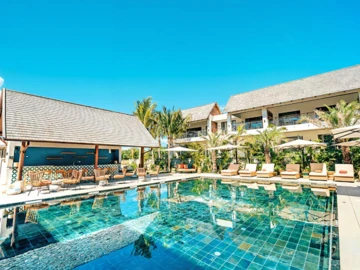
For an island economy where high-end property development is both an economic driver and a key pillar of foreign direct investment, the news landed hard. Evaco had been in business for 24 years. The company was founded in April 2002 by Arnaud Mayer and built its reputation on luxury PDS and IRS villas targeting South African and European buyers in northern Mauritius. Its completed projects include Oasis, Les Villas Athena, Le Domaine des Alizées, and two phases of Le Clos du Littoral, all fully sold. It had generated Rs 12 billion in property sales since its creation. The notion that an institution like Evaco, a cornerstone of the island's luxury development landscape for two decades, could collapse seemed inconceivable.
The Trigger: A Chain Reaction from Silver Bank
On May 25 at 5:49 p.m., Silver Bank sent Evaco a letter demanding immediate repayment of Rs 39,684,383, stating it had "no alternative but to recall the facilities and ask for settlement of the overdue amount". No hard deadline was set, but the impact was decisive.
Silver Bank was itself already in crisis. It had been placed under receivership by the Bank of Mauritius on March 30, 2026, after a failed acquisition process stretched over two years. Its banking licence was formally revoked on April 30, 2026. Evaco owed Silver Bank Rs 276 million, and that number proved to be the last straw.
Cap Marina: The Project That Became a Liability
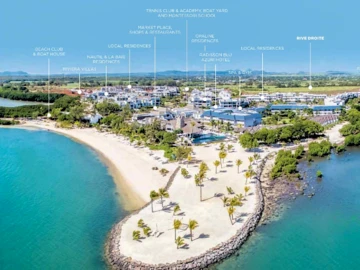
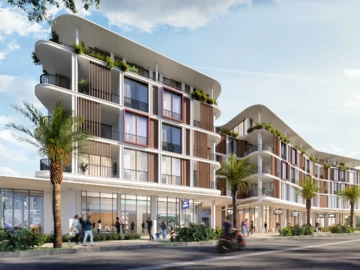
The broader context, however, extends well beyond the immediate pressure of the Silver Bank letter. At its core, the Evaco collapse is the story of Cap Marina, an ambitious luxury development in Cap‑Malheureux with more than 300 apartments and villas on a large canal‑front estate, with views of Coin‑de‑Mire and an extensive freshwater canal system running through the site. Earlier marketing material positioned it as a super‑prime project with several hundred units and a canal of around 1.5 kilometres. Units were marketed at high‑end prices, with most buyers coming from South Africa and France, and a large majority of units reportedly sold off‑plan.
The problem was delivery. Clients began reporting delays as early as 2024. Construction slowed, then stalled. The reason was a structural mismatch between the pace of sales, the cost of construction, and the company's capacity to finance the gap. Regulatory processing times for title deed approvals had ballooned from one month to six months, disrupting cash flow projections and leaving the group short of the revenue needed to fund ongoing works. The group's consolidated total debt had climbed to MUR 2.94 billion by June 2024, against a tangible net worth of MUR 628 million. The group had also taken out a Rs 160 million bridging loan from SBM in the 2025 financial year and was in discussions for an additional Rs 700 million facility, a request the bank ultimately declined. Evaco employed around 350 staff, and several people close to the file say they have not been paid since April 2026.
Evaco also raised money by issuing notes on the Stock Exchange of Mauritius, promising regular interest payments and full repayment at maturity. This model works only if projects are completed on time and cash keeps flowing in. Evaco issued bonds of Rs 650 million in 2019, then again in 2024 with SBM, and a further Rs 399 million in 2025, largely to refinance earlier issues. Successive bond issuances were used to refinance earlier debt obligations. As Cap Marina slowed and administrative delays choked revenue, total debt owed to banks and bondholders ballooned compared to the group’s own capital and assets.
What Does This Mean for the Industry?
Another central feature of the Evaco collapse is the role of the Garantie Financière d’Achèvement, or GFA. For schemes such as PDS, IRS, RES and Smart Cities, which are supervised by the Economic Development Board and largely target foreign buyers, developers typically must provide this completion guarantee. In Evaco’s case, SBM holds the GFA obligation for Cap Marina, exposing it to roughly Rs 2 billion if it has to step in to complete construction.
Foreign buyers in PDS and IRS schemes have legal recourse through the GFA mechanism. Mauritian nationals who purchased units under VEFA arrangements outside these schemes generally do not benefit from the same level of protection and, in past failures, have often faced very limited effective recourse when developers default.
SBM Is Now the Key Variable
SBM Bank, which holds both the debt and the GFA obligation, has been careful in its public communications. In a statement on May 30, it confirmed that the receivership followed "a rigorous evaluation process" and that it had taken appropriate steps to protect depositors' interests. The bank acknowledged the concerns of property buyers and stated it was examining available solutions within its legal and regulatory constraints, while noting it was "premature" to pronounce on specific measures.
The bank's exposure is substantial: Rs 2.5 billion in direct debt from Evaco, plus up to Rs 2 billion in potential GFA obligations for Cap Marina completion.
Foreign Buyer Confidence
Mauritius has spent two decades building a reputation as a premium destination for high-net-worth residential investment, particularly from South Africa and Europe. The PDS and IRS frameworks were specifically designed to make the island a safe, legally structured entry point for foreign capital. More than 70% of Cap Marina units were sold to non-Mauritian buyers, most of whom have paid substantial deposits or full purchase prices under VEFA arrangements. If those buyers do not receive completed properties or face prolonged uncertainty before they do, the reputational damage to Mauritius as a destination for luxury residential investment could be significant and lasting.
A Warning for the Broader Sector
The Evaco model, selling luxury units off-plan, using presales and bond issuances to fund construction, and relying on regulatory approvals that assumed predictable timelines, is not unique. Several developers on the island operate with comparable structures. When processing times for title deeds stretch from one month to six months, when construction costs inflate, and when global interest rate conditions tighten access to refinancing, that model becomes fragile quickly.
What is already clear is that the fall of Evaco is not simply the story of one company that borrowed too much. It is a stress test of the entire framework that underpins high-end property development in Mauritius.