Continue with Facebook
 Continue with Email

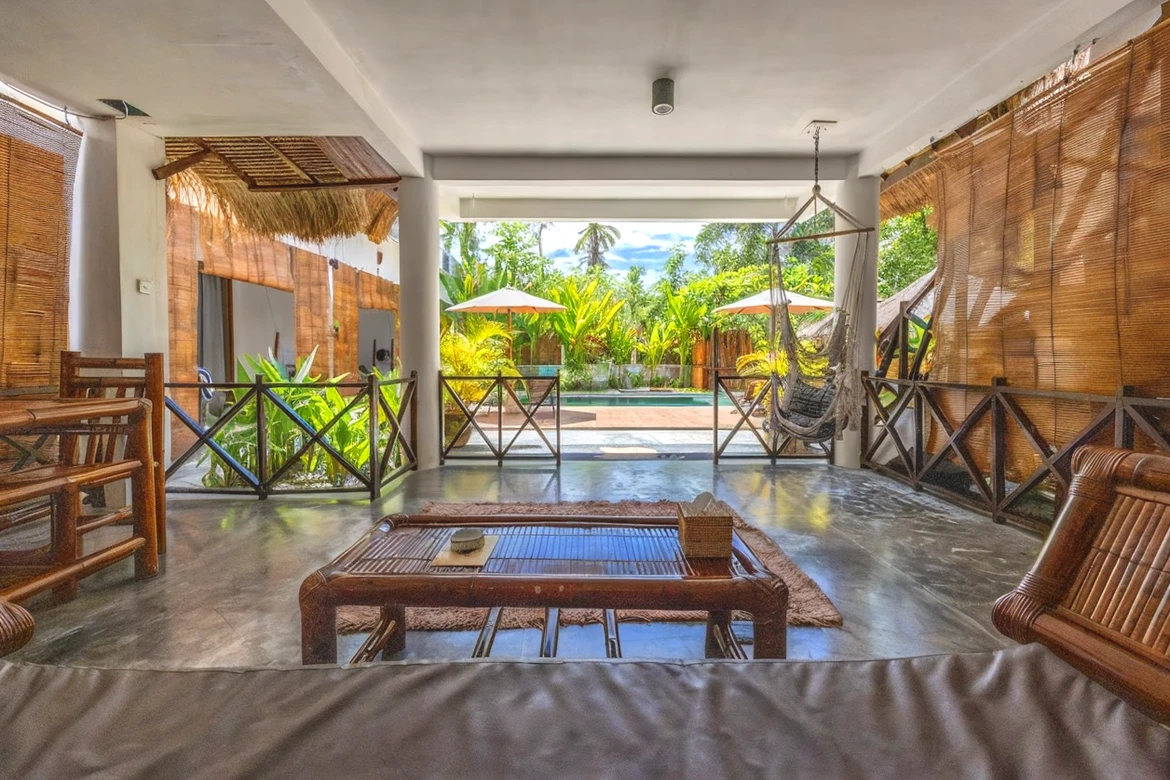
Airbnb and its peer platforms are no longer a footnote in Mauritius tourism. According to Airbtics, a rental analytics platform, active Airbnb listings on the island reached 4,691 in January 2026, a rise of 81.7 percent in three years. The sector now operates roughly 20,000 rooms, a number that exceeds the combined room capacity of all 111 licensed hotels, which together hold 14,112 rooms. The economic weight of non-hotel accommodation has reached an estimated Rs 20 billion per year in direct impact. Short-term rental platforms now serve one in four tourists on the island.
Tourists Pay Less Per Night, but Stay Longer
Airbnb guests in Mauritius pay an average of Rs 4,364 per night, a fraction of the Rs 10,700 that a hotel room costs. Yet those same guests stay for an average of 15 nights, compared to 9 nights for hotel visitors. The arithmetic is straightforward: a total trip spend of Rs 39,600 for a non-hotel stay is lower in absolute terms than the Rs 81,300 a hotel guest spends, but the money circulates differently.
It flows into local restaurants, private tour operators, car rental firms, markets, and independent activity providers rather than being captured almost entirely within a resort compound. The AXYS Hospitality Industry Report 2026 calculates the spending multiplier for the non-hotel visitor at roughly twice that of the hotel guest.
Hotels Caught Between Costs and Defection
In the first half of 2025, the share of tourists choosing hotels fell from 77.2 percent to 73.4 percent. That four-point loss represents tens of thousands of room nights redirected toward villas, private apartments, and guesthouses. Hotels carry fixed costs that Airbnb hosts simply do not have: full payroll for reception, housekeeping, food and beverage, security, and maintenance teams; debt service on large capital infrastructure; mandatory compliance with Tourism Authority classification standards; and energy costs running hotel-wide systems around the clock.
To compete, established operators are accelerating their integration into premium global networks. LUX* Belle Mare joining Virtuoso is one response: it anchors the property in a network of luxury travel advisers serving high-net-worth clients who book on relationship and reputation rather than price comparison. Others are investing in curated experiences, wellness programming, and extended-stay offers that a private villa cannot match at scale.
The Compliance Gap Widens
The growth of the Airbnb sector has outpaced regulation. Historically, only around ten percent of the estimated 5,000-plus vacation rental units on the island held a valid Tourism Authority licence. The government introduced a EUR 3 tourist levy per night per visitor in October 2025, covering all registered accommodation, but enforcement across thousands of informal listings remains largely theoretical.
The Association of Seasonal Rental Actors (AALSIM) presented evidence to the Finance Minister in April 2025 calling for simplified licensing procedures and sector professionalization. The path forward likely requires Airbnb itself to share booking data directly with regulators, a practice now being legislated across the European Union. Mauritius has not yet gone that far.