Continue with Facebook
 Continue with Email

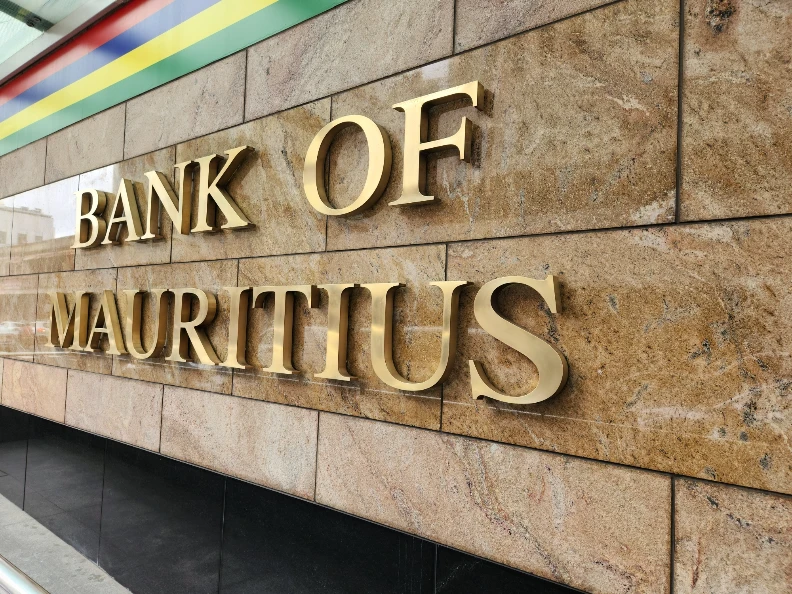
The Bank of Mauritius's June 2025 Financial Stability Report released a few days ago offers a clear verdict on the Mauritian property market: it is currently divided into two distinct, high-stakes areas. While housing prices are soaring, the companies building these properties are simultaneously experiencing severe financial difficulty.
The Residential Real Estate market is experiencing a significant boom. The Residential Property Price Index (RPPI), a tool used to track how housing prices are changing - hit a historical high of 237.9 in December 2024, showing a massive 29.8% annual jump.
This rapid rise is driven by two main factors:
- Strong Lending: Banks are lending aggressively for home purchases, with housing credit growing 10.5% annually.
- Foreign Investment: International investors are pouring money into residential properties through various schemes.
The central bank explicitly flags concerns about "potential speculative activity". The core problem is that property prices are rising faster than people’s nominal income. This "disconnect" suggests housing is becoming unaffordable for local buyers and makes the market vulnerable to a sudden drop, or correction.
In response, the Bank of Mauritius (BoM) has started tapping the brakes. They increased the interest rate in February 2025 to make borrowing more expensive. Crucially, they also forced banks to set aside extra money (a 0.5% provisioning requirement) against housing loans. This action is a preemptive strike designed to protect banks from losses in case the housing prices do fall and borrowers cannot repay their mortgages.
While the number of Non-Performing Loans (NPLs) in the housing sector is currently low at 1.4%, the central bank notes that NPLs, which are loans where the borrower has failed to make payments for a prolonged period, indicating potential loss for the bank, are a lagging indicator, meaning the true risk lies in future defaults if prices collapse.
Verdict on Construction: High-Risk Engine
The Construction sector is highly important to the economy, identified as a primary engine of growth. However, its financial health is dangerously weak.
Despite the residential housing boom that should make construction profitable, the sector is "plagued by a 'persistently high' Non-Performing Loan (NPL) ratio". In other words, many construction companies are struggling to repay their bank loans. This high level of bad debt suggests major weaknesses, potentially due to rising costs or speculative projects failing.
The coexistence of a booming residential market and a struggling construction sector is called a critical anomaly. If many construction projects fail due to this financial strain, it could ultimately lead to a glut of unfinished properties and put downward pressure on the residential prices that are currently soaring.
Recognizing this systemic risk, the BoM has taken direct action here too, reintroducing macroprudential provisions specifically for the Construction sector to ensure banks are better prepared to absorb potential credit losses from these high-risk borrowers.
In contrast to the turbulence in residential and construction financing, the Commercial Real Estate (CRE) market is seen as a model of stability.
CRE refers to property used for business, like office buildings, shopping centers, and warehouses, as opposed to homes.
Risk from this segment "remained low". Bank lending to CRE projects is characterized by a "cautious approach" and "prudent lending practices". As a result, the exposure of banks to CRE has dropped to a modest 9.7% of all corporate credit.