Continue with Facebook
 Continue with Email

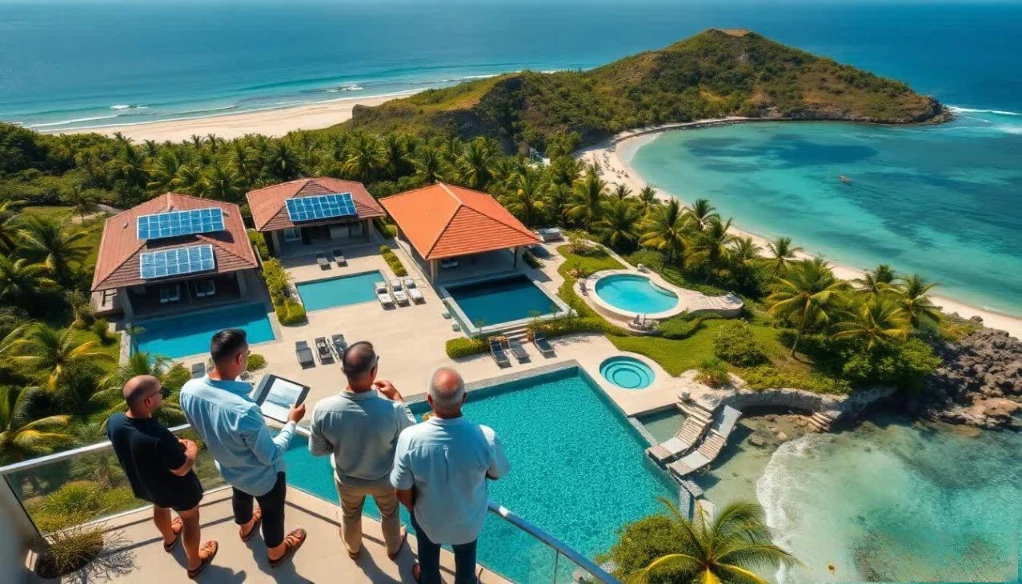
The 2025-2026 National Budget and the Finance Act 2025 have fundamentally reshaped the landscape for foreign real estate investors in Mauritius. The government has introduced a series of measures designed to move the market away from short-term speculation and towards more controlled, sustainable, and long-term investment. While the barrier to entry is now higher, Mauritius continues to offer significant benefits for the right type of investor.
The New Reality: What Has Changed?
The core changes announced in June 2025, taking effect from July 1, 2026, will create a more regulated and higher-cost environment for non-citizens. This provides current investors with an 11-month transition period under the existing favorable tax structure.
- Increased Transaction Taxes: The registration duty for non-citizens acquiring property under approved schemes (PDS, IRS, RES, Smart City, G+2 apartments of at least MUR 6 million) has doubled from 5% to 10% of the property's value. Similarly, the land transfer tax for developers selling these properties has also increased from 5% to 10%.
- Future Tax Implications: Starting July 1, 2026, non-citizens selling properties under EDB schemes will face a 10% land transfer tax calculated on the property's value. This represents a significant increase from current rates and affects all residential property transactions under Smart City, PDS, RES, IRS, and IHS schemes.
- Restricted Market Access: The provision that allowed non-citizens to purchase property outside of the approved schemes for a minimum of USD 500,000 has been repealed. Foreign investment is now strictly confined to government-regulated schemes.
- Reduced Incentives for New Smart Cities: A comprehensive suite of fiscal incentives for new Smart City projects, including the eight-year corporate income tax holiday and customs duty relief, has been withdrawn for any project approved after June 5, 2025.
- Stricter Residency and Permit Rules: The eligibility criteria for occupation and residence permits have been tightened. Investor permits now face increased turnover requirements, with USD 50,000 investments requiring MUR 20 million cumulative turnover over 5 years, and USD 100,000 investments requiring MUR 15 million cumulative turnover over 5 years. Additionally, the waiting period to apply for permanent residence has been extended from three to five years, though regular residence permits maintain their standard validity periods.
Is It Still Beneficial for a Foreigner to Invest?
Despite these significant changes, the answer for many will still be yes, but the investment thesis has shifted. The market is now better suited for long-term investors focused on lifestyle, stability, and fiscal residency rather than short-term capital gains.
Here are the key reasons why Mauritius remains an attractive proposition:
The Core Tax Advantages Remain Intact: This is the most crucial factor. While transaction taxes have increased, the fundamental pillars of Mauritius's fiscal attractiveness for residents are unchanged. These include:
- A 20% tax on income, including rental income.
- No Capital Gains Tax on property sales.
- No inheritance or succession tax.
- No property or housing tax.
- For high-net-worth individuals seeking fiscal residency, these enduring benefits can significantly outweigh the one-off increase in acquisition costs.
A Clear Pathway to Residency: Acquiring a residential property within an approved scheme for a minimum value of USD 375,000 still grants the buyer, their spouse, and dependents a residence permit. This permit remains valid for as long as the investor owns the property, making it one of the most straightforward and secure residency-by-investment programs available.
A Resilient and Growing Luxury Market: The high-end property market in Mauritius has demonstrated remarkable strength, driven by a consistent influx of high-net-worth individuals (HNWI). The HNWI population in Mauritius grew by 63% over the last decade, the strongest growth in Africa. This demand underpins property values in prime locations, with prices in areas like Grand Bay and Tamarin seeing substantial increases, with average annual growth of approximately 9.5% and 15% respectively over the past decade.
Unmatched Quality of Life and Stability: Mauritius's core value proposition as a safe, politically stable, and secure country with a high quality of life remains unchanged. For investors prioritizing lifestyle, security, and a welcoming environment for their families, these non-financial returns are invaluable.
A Shift Towards a More Sustainable Market: The government's policy changes are designed to create a more stable and mature real estate market. By curbing speculation and removing broad-based incentives in favor of mandatory green features for new projects, the government is fostering a market that values long-term quality and sustainability. This strategic pivot can enhance the long-term value and credibility of Mauritian real estate on the global stage.
Verdict: A Market for the Committed Investor
The policy changes announced in the June 2025 Budget, which become effective July 1, 2026, have created a transition period for investors. While these changes will make investing in Mauritian real estate more expensive and selective, current investors have an 11-month window before the new rules take full effect.
For foreigners thinking long-term, the benefits are still compelling. The combination of a stable and attractive core tax regime, a direct path to residency, a high quality of life, and a resilient luxury property market ensures that Mauritius continues to be a premier destination. The new rules act as a filter, favoring serious investors who are committed to becoming part of the Mauritian economic and social fabric.
If your goal is to secure a high-quality lifestyle and fiscal residency in a stable jurisdiction, and you are prepared for the higher entry costs, then investing in Mauritian real estate is still a highly beneficial and strategic decision.
House prices for sale in Grand Bay
House prices for sale in Tamarin